 |
|
About me
I am an associate professor in EECS at MIT, where I'm also a member of CSAIL. My research focuses on understanding how intelligence works, and how it could work. I teach courses
on deep learning, computer vision, and robotics.
You can find a bio about my background here.
⭐
• I started writing essays here, including one on "Robot-Use Agents" and another "On the Value of Doing a PhD in the Age of AI". I hope to write these semi-regularly.
• Our grad-level MIT course on deep learning (6.7960), is now freely available on Opencourseware here
• Our computer vision textbook is freely available in an online form at visionbook.mit.edu
News
⭐• I started writing essays here, including one on "Robot-Use Agents" and another "On the Value of Doing a PhD in the Age of AI". I hope to write these semi-regularly.
• Our grad-level MIT course on deep learning (6.7960), is now freely available on Opencourseware here
• Our computer vision textbook is freely available in an online form at visionbook.mit.edu
Research Group
The goal of our group is to understand fundamental principles of intelligence.We are currently focusing on two big directions, which you can click on to expand:
Our goal in studying these questions is to help equip the world with the tools necessary to bring about a positive integration of AI into society; to understand intelligence so we can prevent its harms and to reap its benefits.
The lab is part of the broader Embodied Intelligence and Visual Computing research communities at MIT.
|
PhD Students Caroline Chan Hyojin Bahng Akarsh Kumar Shobhita Sundaram Ishaan Preetam-Chandratreya Nathan Cloos Kaiya (Ivy) Zhao Yulu Gan Adam Rashid Ching Lam Choi Xingjian Bai Kento Nishi Jayden Teoh |
Postdocs Prafull Sharma Antonio Norelli MEng Students Sophie Wang |
|
Former Members and Visitors |
|
| Interested in joining the group? Please see info about applying here. | |
Highlighted papers (New papers, All papers)
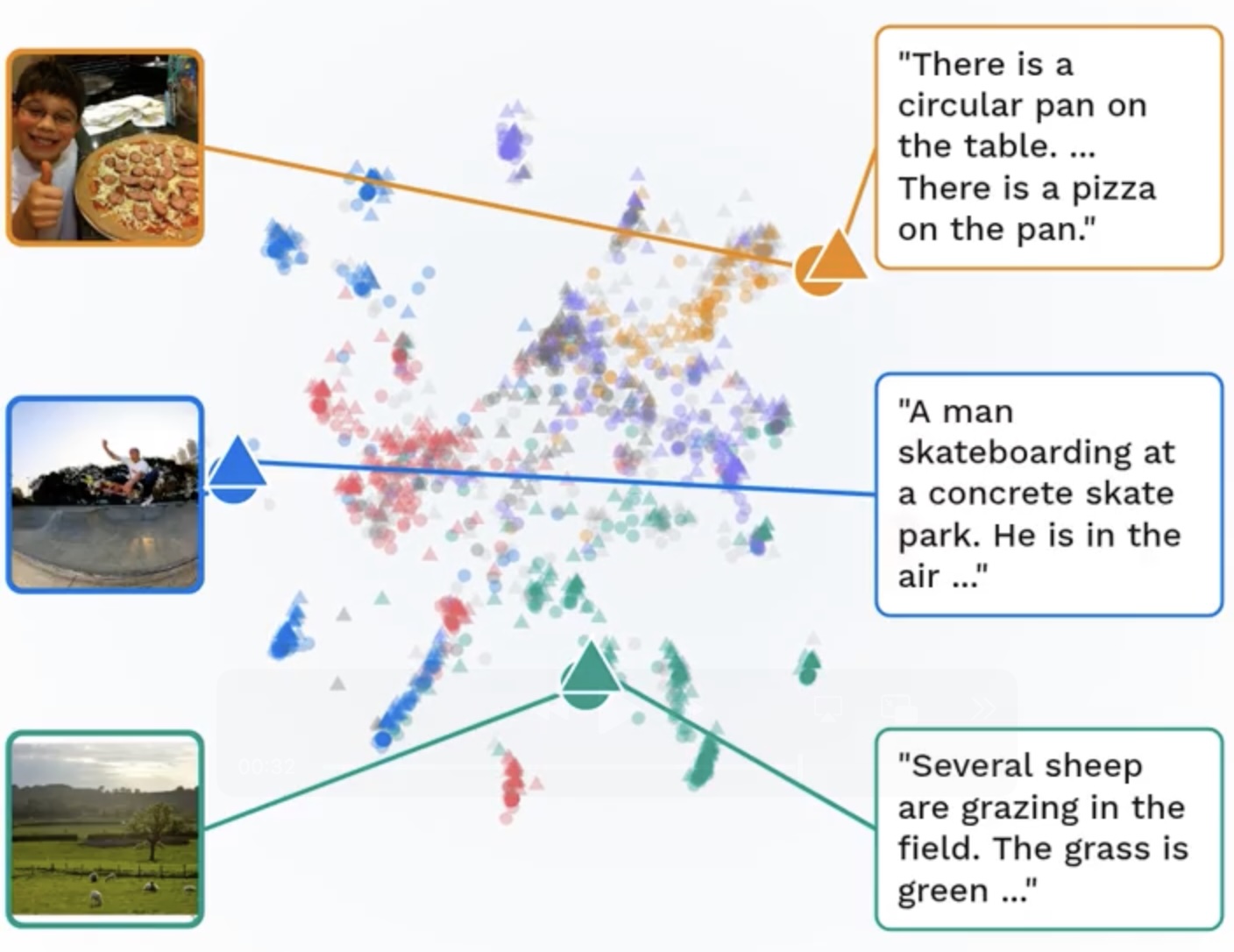
| Shared Geometry as a Rosetta Stone: Cross-Modal Alignment Without Paired Data Dominik Schnaus, Thomas Dagès, Daniel Cremers, Xi Wang, Phillip Isola arXiv 2026. [Paper][Website][Code]
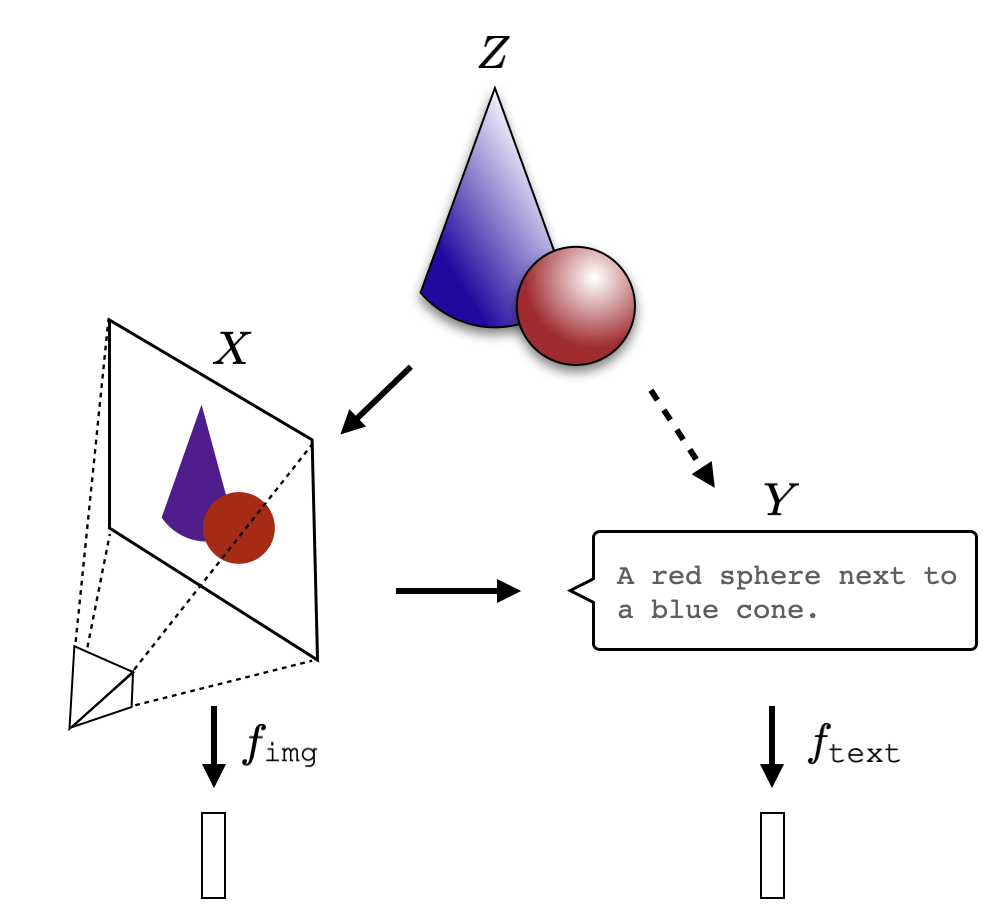
The platonic representation hypothesis (see below), argued that models are converging in their representational geometry. This should make it relatively
easy to translate embeddings between models, even without paired data. This paper realizes that promise, translating between text and images as well as other modalities.
| |
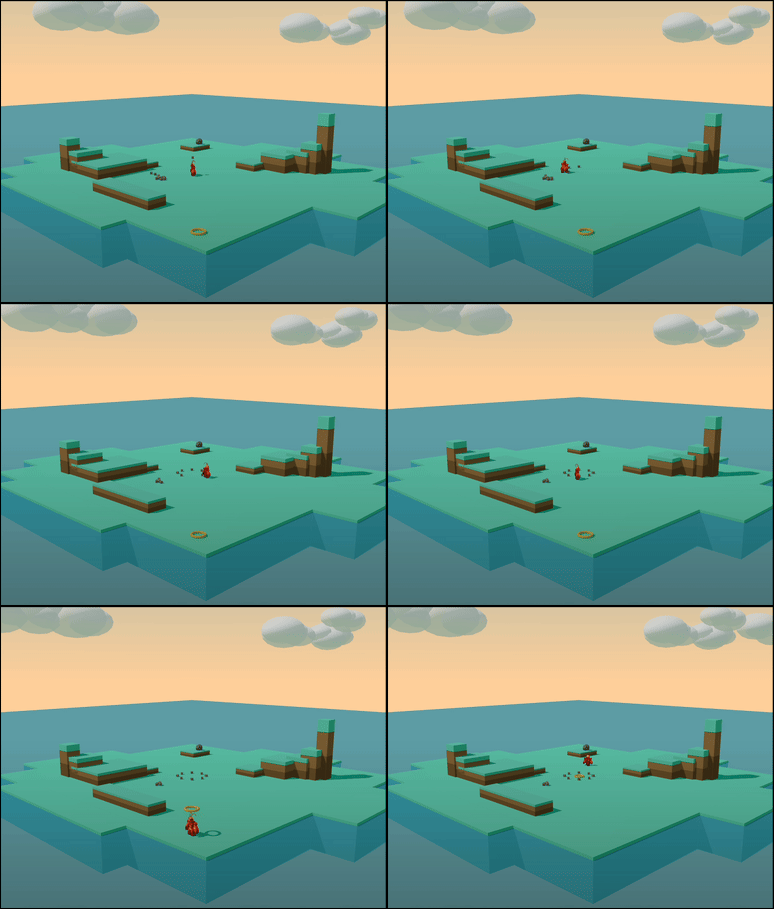
| Is This Machine Playing? Nathan Cloos*, Antonio Norelli*, Daniel Durbin, Jacob Andreas, Daniela Rus, Phillip Isola arXiv 2026. [Paper][Website][Code]
This is our first paper in the ethology of agents direction. We find that LLM agents engage in behavior akin to play, and that play can act as an effective mode of learning.
| |
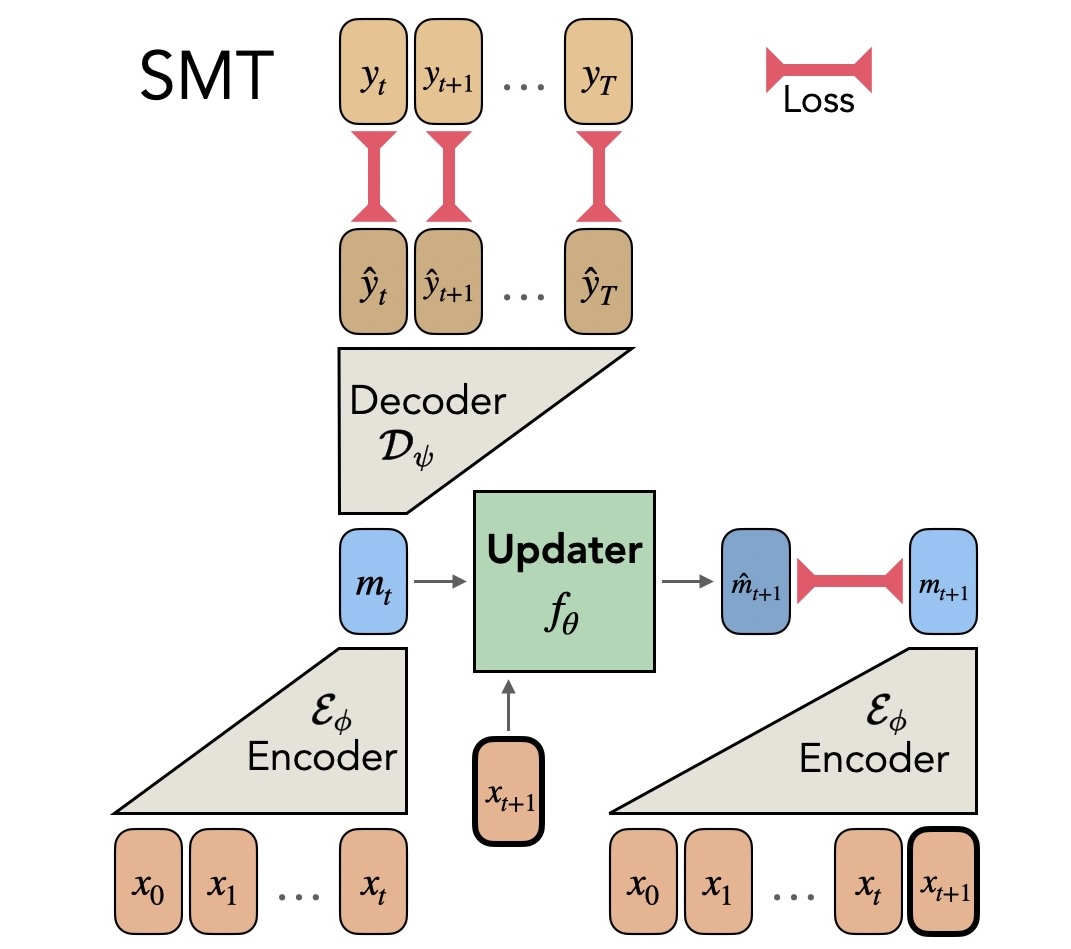
| Pretraining Recurrent Networks without Recurrence Akarsh Kumar, Phillip Isola arXiv 2026. [Paper][Website][Code]
This paper aims to replace backprop through time (BPTT) for training RNNs. We learn a predictive state representation (with a transformer), and train an RNN to mimic the predictive state sequence.
| |
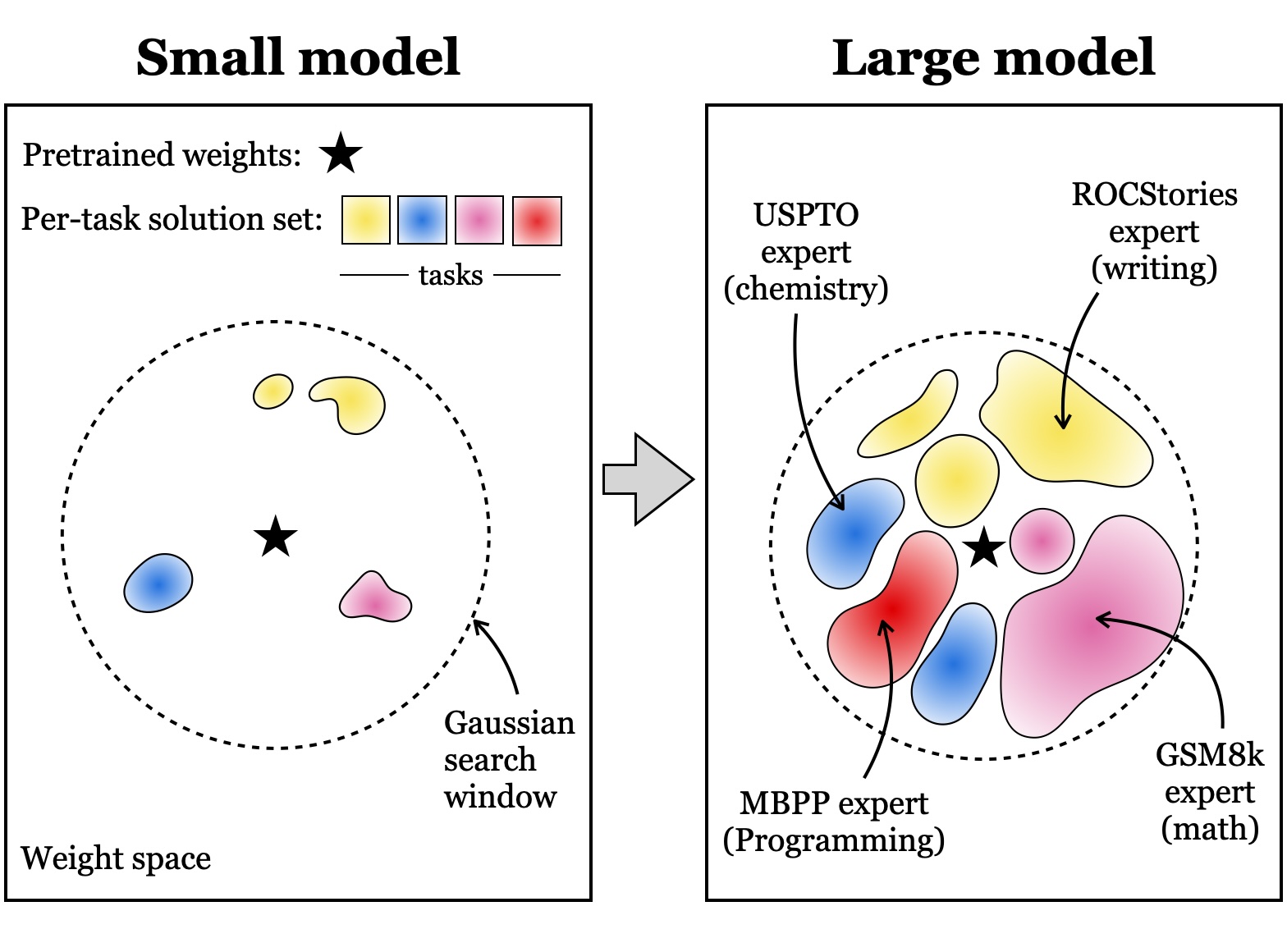
| Neural Thickets: Diverse Task Experts Are Dense Around Pretrained Weights Yulu Gan, Phillip Isola ICML 2026 (spotlight). [Paper][Website][Code]
This paper identifies a structure we call a thicket, which surrounds pretrained weights in certain models. Thickets are dense neighborhoods of solutions to different downstream tasks.
They appear after pretraining, and can make post-training easy.
| |
| Scalable Optimization in the Modular Norm Tim Large*, Yang Liu, Minyoung Huh, Hyojin Bahng, Phillip Isola, Jeremy Bernstein* NeurIPS 2024. [Paper][Code][Docs][Slides]
This paper defines the modular norm, a ruler of sorts for measuring distance in neural net weight space.
It built up some of the theory that underpins the Muon optimizer.
| |
| The Platonic Representation Hypothesis Minyoung Huh*, Brian Cheung*, Tongzhou Wang*, Phillip Isola* ICML 2024 (Position Paper, Oral). [Paper][Website][Code][Quanta Magazine Article]
This paper hypothesized that different models, trained on different data and modalities, are converging in how they represent the world.
It laid the groundwork for the quest for representational universals we have subsequently embarked on.
|